What Uranus says in your birth chart
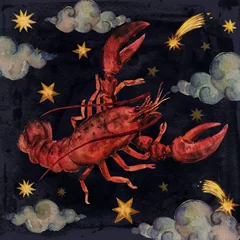
Uranus is where your life breaks the pattern. It is the area in which you cannot bear doing it the way it has always been done, in which change arrives suddenly and in which independence matters more than safety. And it is, for the same reason, the area in which you drop good things without quite being able to explain why.
Before any description, the caveat that changes how this whole series should be read — and it is the strongest this blog has ever written: the sign of Uranus is not yours. It is your generation's. It stays around seven years in each sign and takes eighty-four to go round, so everybody born in the same seven-year band as you has exactly this same Uranus.
The consequence is hard and it is honest: on its own, the sign of Uranus does not describe you. It describes what your whole generation broke — and it is a reading of history, not of personality. What individualises it is the house it fell in, which depends on the exact hour of birth, and its conversation with the rest of the chart.
And there is a clock here that almost nobody names and that many people have already lived: the opposition of Uranus, at around 42 years old. It is when it reaches the point opposite the one it occupied at your birth — halfway round —, and it is the astrological account of the midlife crisis. It is not prophecy: it is a clock that has already run, and that you can check looking back.
What it means to have Uranus in Cancer
Having Uranus in Cancer means your generation took apart the model of family it received. Cancer is cardinal water, ruled by the Moon — the home, the family, the root. Uranus there breaks precisely the place that should be the steadiest, and the result is a generation that did not repeat its parents' domestic arrangement.
Anyone born between 1949 and 1956 grew up in a family of rigid shape and reached adult life taking that shape apart: they left home earlier, married differently, raised children another way.
And here is what hardly any text writes down: this is the position in which the word family stops having a single definition. Uranus in Cancer produces people who build their own home instead of inheriting one — and that is freedom and it is orphanhood, at the same time. The advantage is choosing; the cost is having no ready model for when it goes wrong, and having to invent that too.
It is worth repeating the caveat of this series before going on, because it is stronger here than in any other: this sign belongs to your generation, and not to you. Uranus passed through Cancer from June 1949 to June 1956, and returns to it from May 2033 to May 2040. What is described above is what that whole span broke. What makes it your story is the house Uranus fell into. In the 4th house that becomes someone who moves house many times; in the 10th, someone whose career never fit what the family expected.
How Uranus in Cancer shows up day to day
It shows up in the distance between the family this generation was born into and the one it built. These are concrete signs, the kind you recognise in your own week:
- did not repeat their parents' domestic arrangement
- left home earlier than the previous generation
- has a restless relationship with the place they live in
- builds a family in a way that needs explaining
- misses a root there was no way to inherit
- defends the freedom of whoever lives with them
Notice what that list does not say. It does not say the person is detached or rootless — two labels this position carries that describe the excess, not the position. It says this generation invented its own model of home.
What are the strengths of Uranus in Cancer
The strength is the chosen home: this generation builds the house instead of inheriting it. Whoever chooses their own domestic arrangement creates a place that serves the life they have, not the one expected of them. It is a freedom the previous generation did not have, and it changed what the word family means for the ones that followed.
In practice that becomes three useful things: an ability to make a home anywhere, which serves whoever changes cities; a real freedom of family arrangement, which opened the way for a great many people; and a sensitivity to what makes someone feel at home.
That strength does best in work with home and with family, care, real estate, remote arrangements and anything that redefines what living somewhere means. And it does badly in an environment demanding fixed physical presence for decades, a rigid family arrangement and anywhere there is only one correct format.
What are the challenges of Uranus in Cancer
There are two, and they are opposites: the excess is restlessness turning into a life with no address, and the deficiency is the person who never broke anything and lives a life they did not choose. The Shelly Method reads every archetype through four faces — the light, the shadow, the excess and the deficiency —, and in Uranus the two ends are the same thing seen from two sides: it speeds up what it touches. Either the rupture comes before its time, or it never comes and leaves as a symptom.
The excess is stopping nowhere: the person changes house, city and arrangement, and calls freedom a real difficulty with staying. It also shows up as emotional distance from those who are close, because being near demands a kind of constancy that frightens.
The deficiency is the opposite and passes for stability: the person stayed in an arrangement that is no longer hers and calls that commitment. Here it is the person who stayed exactly where they were born, in the same old shape, out of fear of losing the little root they had. They call that family values — and carry a background restlessness they do not connect to the choice.
Both faces have the same raw material, and that is why the repair is the same: a root that has to be built, not less freedom. It is not solved by asking the person to settle — settling, here, is not the verb. It is solved with one: a place, a person or a routine that goes on existing after every move. It is little, and it is enough for there to be ground — and that is what the house of Uranus and the rest of the chart show.
These two challenges do not show up the same way in two people with Uranus in Cancer — and since this sign belongs to a whole age span, the difference between them lies entirely in the house, in the retrograde and in the rest of the chart.
See this in my chart, freeHow Uranus in Cancer evolves over time
It matures when freedom comes to live alongside a ground — and that is worth more than any attempt to learn how to settle down. Freedom remains the talent; what changes is that it stops costing all belonging.
And there is a clock here that almost nobody names and that many people have already lived: the opposition of Uranus, at around 42 years old. That is when it reaches the point opposite the one it held at your birth — half of the eighty-four-year turn —, and it is the astrological account of the midlife crisis. Here the opposition tends to arrive with home and with family: a big move, the death or illness of whoever raised the person, or the decision to build a home another way.
Anybody past forty-five almost always recognises the phase: leaving a job that looked permanent, the end of a long relationship, the move of city or profession nobody around understood. It is not prophecy — it is a clock that has already run, and that you can check looking back.
Maturity here is not learning to stay. It is the person coming to tell apart the move that opens up a life from the move that only avoids roots. The mature Uranus in Cancer stays free, and comes to have somewhere to return to — and it is that place that turns restlessness into choice.
No honest text gives an exact age for this: the arc depends on the whole chart.
What Uranus in Cancer does not say about you
It says what your generation broke, not who you are. It is the most important difference in this whole series: a text that described this placement as a personal trait would be selling as yours a climate that seven whole years of people share.
And it is the LEAST personal piece of your chart: millions of people born in the same seven-year band have this same Uranus. What individualises it is the house, which depends on the exact hour: Uranus in Cancer in the 7th house becomes someone who only commits in an unconventional arrangement; in the 2nd, someone who feels safe in something that is not property. See the series Uranus in the 12 houses, which is where this reading becomes yours.
And there is Saturn, which is the exact counterweight to Uranus: one holds the form, the other breaks it. Reading the two together separates a rupture that builds from one that only undoes. And there is Neptune and Pluto in the 12 signs, the other two planets of your generation, and The Sun in the 12 signs, which the date makes truly yours.
A limit said out loud, because it is also part of reading seriously: none of this is prediction. Astrology describes a tendency and gives vocabulary for what the person already lives — it does not replace your work or your decisions.
Frequently asked questions about Uranus in Cancer
How do I find out which sign my Uranus is in?
By date: Uranus stays about seven years in each sign. The dates here mark the continuous passage — at the turns it enters, goes retrograde and enters again, and the coming and going lasts months, so anyone born near one of them needs the calculated chart. On its own, it says little: the personal part is in the house, and the house requires the hour.
Is Uranus retrograde in the birth chart a bad thing?
No, and around two in every five births have Uranus that way — it is almost a routine condition, not an exception. What changes is the direction of the rupture: instead of showing up as an outward, visible gesture, it happens inwardly first. This person usually changes her mind about her own life long before she changes anything in it.
Does Uranus in Cancer mean my family was unstable?
It means your GENERATION took apart the model of family it received — and that is history, not biography. Seven years of people share this sign, including those who had a stable childhood and those who did not. The part that is yours is in the house Uranus fell into, and that depends on the exact hour of your birth.
Why can't I stay in the same place for long?
Because this combination puts restlessness exactly where there should be rest, and the body confuses staying with being trapped. What helps is not forcing yourself to stop: it is having one small fixed point — a person, a routine, a place — that survives every move. With a fixed point, moving stops being flight.
Is Uranus the planet of rebellion?
It is the piece tradition calls that, and the word gets in the way more than it helps. Rebellion suggests a tantrum; what Uranus describes is a real inability to stay in an arrangement that stopped making sense. The difference shows in the result: a tantrum breaks and builds nothing in its place, and Uranus breaks because it has already seen what comes next. What hurts here is not the rupture — it is that it arrives before the person has agreed anything with whoever stays.
Why does this sign say so little about me?
Because it belongs to your whole generation, and that is the honest answer. Uranus takes seven years in each sign, so this text describes a climate that millions of people share with you. The personal part is the HOUSE it fell in — which depends on the hour of your birth — and the way it talks to the Sun, the Moon and the Ascendant. A text that promised more than that would be selling what it does not have.
Uranus in Cancer in short
Keywords family, home, autonomy, uprooting
This one cannot be found from the date: the Moon changes sign every two and a half days, more or less. Two people born on the same day can have different Moons — it depends on the TIME. Without a birth time there is no Moon, and that is why the chart asks for date, time and city. You can calculate it for free here.
See your whole chart, for free
Sun, Moon, Ascendant, the planets, the houses and the aspects calculated from your date, time and city of birth. It takes less than a minute.
Generate my birth chart for free Want the written reading of the whole? Personality and essence crosses Sun, Moon and Ascendant instead of describing each one separately.