What Pluto says in your birth chart
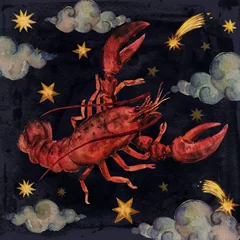
Pluto is where your life does not go back to what it was. It is the area where a crisis does not return what it took, where power shows up — yours and other people's — and where rebuilding is the only way out, because the way back has stopped existing. And it is, for the same reason, the area of your life that changed most between twenty and forty.
Before any description, the same caveat as the other two generational series, and here it is the strongest of all: the sign of Pluto is not yours. It belongs to your generation. It stays between twelve and thirty-one years in each sign — and that variation is not rounding, it is its orbit, the most eccentric of the nine bodies this blog reads.
The consequence is hard and it is honest: on its own, the sign of Pluto does not describe you. It describes what your whole generation had to remake — and it is a reading of history, not of personality. What individualises it is the house it fell in, which depends on the exact hour of birth, and its conversation with the rest of the chart.
And there is a clock here, but it is different from the other two: the square of Pluto has no fixed age. In Uranus the opposition falls near 42 and in Neptune the square near 41, for any generation. In Pluto it varies from 36 to over 80 years old depending on the sign it was in when you were born — and that is the information the texts in this series carry, because no single number would be true.
What it means to have Pluto in Cancer
Having Pluto in Cancer means your generation remade the family because it had been destroyed. Cancer is cardinal water, ruled by the Moon — the home, the family, the root, belonging. Pluto there puts power and crisis inside the home: it is the combination in which the family stops being a refuge and becomes the place where one survives.
Anyone born between 1914 and 1939 was born in a war, grew up in a worldwide economic crisis and reached youth in the next war. Millions lost home, country and relatives, and rebuilt a family out of what was left — literally.
And here is what hardly any text writes down: this is the position in which home becomes a question of survival, not of comfort. Pluto in Cancer produced the generation that most rebuilt a home in the literal sense, and that is why it tends to have a relationship with food and with security that the following ones find excessive. It is not excessive: it is the memory of real scarcity.
It is worth repeating this series' caveat before going on, because the span here is the widest of the three: this sign belongs to your generation, and not to you. Pluto passed through Cancer from May 1914 to June 1939 — twenty-five years, and it is the span now past eighty-six. What is described above is what that whole span had to remake. What makes it your story is the house Pluto fell into. In the 4th house that becomes someone whose house was lost and remade; in the 8th, someone marked by an inheritance or a loss that reorganised everything.
How Pluto in Cancer shows up day to day
It shows up in the difference between what this generation learned about security and what the following ones take for granted. These are concrete signs, the kind you recognise in your own week:
- treats food and home as a serious matter
- rebuilt a family after losing part of it
- confuses protecting with controlling
- keeps things because they once really ran out
- has an intense and unspoken bond with the mother or the daughter
- does not speak of what hurt, and expects it to be understood
Notice what that list does not say. It does not say the person is controlling or overly attached — two labels this position carries that describe the excess, not the position. It says that generation remade the home after losing it.
What are the strengths of Pluto in Cancer
The strength is the capacity to rebuild: this generation remade a home more than once. Whoever saw their own house disappear and raised another knows something that is not learned from a book — and that is why this span is the one that panics least when everything goes wrong.
In practice that becomes three useful things: a resilience most generations never needed to have; an ability to make family with people who are not relatives; and a practical notion of what is enough to live on.
That strength does best in care, food, property, public service and any arrangement where protecting someone is the job. And it does badly in an environment with no bond at all, an arrangement unstable on principle and anywhere the past cannot be mentioned.
What are the challenges of Pluto in Cancer
There are two, and they are opposites: the excess is protection becoming control of other people's lives, and the deficiency is the person who handed over their own power so as not to have to use it. The Shelly Method reads every archetype through four faces — the light, the shadow, the excess and the deficiency —, and in Pluto they do something that happens in no other planet: the two alternate in the same person. Controlling everything and being unable to touch anything are the same difficulty in two stages, and whoever lived one has usually lived the other.
The excess is watching over whoever they love: the person decides for the children, sets money aside without telling anyone and calls that care. It also shows up as a real difficulty in letting go — of a house, of things, of people —, even when it no longer does anyone good.
The deficiency is the opposite and passes for lightness: the person handed over control of their own life and calls that acceptance. Here it is the person who cut the root for good. After the loss, they decided not to depend on anyone, never spoke of the family again and lived alone by choice — and their generation's competence, which is remaking a home, stayed switched off.
Both faces have the same raw material, and that is why the repair is the same: a protection that needs conversation, not less care. It is not solved by asking the person to let go — letting go, here, produces the second face. It is solved by telling: the story said out loud to whoever came after, with the name of what was lost, so that care stops being surveillance — and that is what the house of Pluto and the rest of the chart show.
These two challenges do not show up the same way in two people with Pluto in Cancer — and since this sign belongs to a whole twenty-five-year span, the difference between them lies entirely in the house, in the retrograde and in the rest of the chart.
See this in my chart, freeHow Pluto in Cancer evolves over time
It matures when what hurt becomes a story told — and that is worth more than any attempt to learn detachment. Care remains the talent; what changes is that it stops needing to control in order to work.
And here there is a clock, and it is different from the Uranus one and the Neptune one: the square of Pluto has no fixed age. That is when it reaches ninety degrees from the point it held at your birth — a quarter of the turn —, and since its orbit is eccentric, the age at which that happens changes from generation to generation. This generation lived it between forty-five and fifty-eight, and it tended to arrive with home and family: the death of the parents, the children leaving, the move that closed a cycle.
It is worth insisting because almost every text out there gets it wrong: there is no single age for the square of Pluto. It falls near 36 in Virgo and in Libra, and after 70 in Aquarius. A single number here is a copy from Uranus.
Maturity here is not letting go of the family. It is the person telling apart the care that protects from the care that holds someone in place. The mature Pluto in Cancer goes on caring, and comes to let people choose — and it is that choice that turns control into a root.
No honest text gives an exact age for this: the arc depends on the whole chart.
What Pluto in Cancer does not say about you
It says what your generation had to remake, not who you are. It is the most important difference in this whole series: a text describing this position as a personal trait would be selling as yours a climate that a whole span of people shares.
And it is the LEAST personal piece of your chart: tens of millions of people born in the same span as you have this same Pluto. What individualises it is the house, which depends on the exact hour: Pluto in Cancer in the 10th house becomes someone whose career was built in the family's name; in the 12th, someone who carried alone what nobody talked about. See the series Pluto in the 12 houses, which is where this reading becomes yours.
And there is Saturn, which is the exact counterweight to Pluto: one builds slowly what the other brings down at once. Reading the two together separates a crisis that remakes from one that only destroys. See also Uranus and Neptune in the 12 signs, which are the other two planets of your generation, and The Sun in the 12 signs, which the date makes truly yours.
A limit said out loud, because it is also part of reading seriously: none of this is prediction. Astrology describes a tendency and gives vocabulary for what the person already lives — it does not replace your work or your decisions.
Frequently asked questions about Pluto in Cancer
How do I find out which sign my Pluto is in?
By date: Pluto stays between twelve and thirty-one years in each sign, depending on where it is in its orbit. The dates here mark the continuous passage — at the turns it enters, goes retrograde and enters again, and the coming and going lasts months, so anyone born near one of them needs the calculated chart. On its own, it says little: the personal part is in the house.
Is Pluto retrograde in the birth chart a bad thing?
No, and almost half of all births have Pluto that way — it is practically a routine condition, not an exception. What changes is where the transformation happens first: instead of coming from an external event, it starts inside, and the person tends to change their mind about their own life before anything in it changes.
Does Pluto in Cancer explain the control in my family?
It explains the climate of a whole generation, and that is already a lot. Twenty-five years of people share this Pluto, and the control that runs through a family usually has a concrete cause — a war, a flight, a house lost. Astrology names the climate; the history of whoever lived it gives the content.
Is there still anyone with Pluto in Cancer?
Yes, and it is the oldest living span: anyone with this Pluto was born between 1914 and 1939, so they are past eighty-six. This page serves both someone reading their own chart and someone reading a father's, a grandmother's or that of a person who has died — which is a common and legitimate reading.
Is Pluto still a planet?
For astronomy, not since 2006: it is a dwarf planet. For astrology, the change of classification alters nothing — what is read is the position of a body in the sky, and it is still there, with the same orbital period and the same place in the chart. It is an honest question, and the answer is that the two disciplines are measuring different things.
Why does this sign say so little about me?
Because it belongs to your whole generation, and that is the honest answer. Pluto takes between twelve and thirty-one years in each sign, so this text describes a climate that tens of millions of people share with you. The personal part is the HOUSE it fell into — which depends on the hour of your birth — and the way it talks to the Sun, the Moon and the Ascendant. A text promising more than that would be selling what it does not have.
Pluto in Cancer in short
Keywords family, root, survival, control
This one cannot be found from the date: the Moon changes sign every two and a half days, more or less. Two people born on the same day can have different Moons — it depends on the TIME. Without a birth time there is no Moon, and that is why the chart asks for date, time and city. You can calculate it for free here.
See your whole chart, for free
Sun, Moon, Ascendant, the planets, the houses and the aspects calculated from your date, time and city of birth. It takes less than a minute.
Generate my birth chart for free Want the written reading of the whole? Personality and essence crosses Sun, Moon and Ascendant instead of describing each one separately.