What the houses represent in the birth chart
The sign says HOW, and the house says WHERE. Two people with the Moon in Cancer can have emotional lives that look nothing alike: one with the Moon in the 3rd house, who calms down by talking; another with the Moon in the 12th, who only calms down when there is nobody else around. The way of feeling is the same. The place where calm is sought is not.
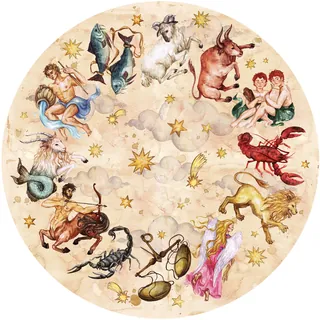
The twelve houses are the twelve areas in which life happens — the body, money, conversation, home, creation, work, partnership, what is shared, meaning, career, the group and withdrawal. The Moon falls in one of them, and that is the area the person runs to when the day goes wrong.
And here is what separates this series from every other one on the blog: the house is the piece of the chart that depends most on the time of birth. The twelve houses are counted from the Ascendant, and the Ascendant changes roughly every two hours and depends on the city. With no time and no place there is no house at all — not even an approximate one. That is why hardly any site talks about houses: it is work, and it means asking for more than the date.
What it means to have the Moon in the 1st house
Having the Moon in the 1st house means what you feel shows before you speak. Mood is not a private matter for this person: it is on the face, in the body, in the way of walking into a room. They are read before they are heard.
The 1st house is the body, presence and beginning — the door the rest of life comes through. With the Moon there, the door is made of need: this person introduces themselves to the world by the emotional state they are in, and not by the idea they have of themselves.
And here is what hardly any text writes down: they do not have more moods than other people, they have visible moods. Everybody wakes up badly one day and well the next; the difference is that in this person it is public. Calling them unstable is confusing transparency with swinging — and it is one of the most unfair labels popular astrology hands out.
There is a second piece that changes everything: the sign this Moon is in says what matter this need is made of, and the ruler of the 1st house says what clothes it arrives in. The house gives the ground; the sign and the ruler give the shape.
How the Moon in the 1st house shows up day to day
It shows in the gap between what this person wants to show and what they actually show. These are concrete signs, the kind you recognise in your own week:
- people ask whether everything is all right before they say a word
- the body gives it away first: sleep, hunger and posture change along with the state
- walks into a place and absorbs its mood within minutes
- finds it hard to fake enthusiasm they do not feel
- the whole day can turn because of one conversation in the morning
- strangers come close and tell them personal things
Notice what this list does not say. It does not say the person is fragile nor dramatic — two labels this position carries and which describe other people's discomfort, not the position. It says what they feel does not stay put away.
What are the strengths of the Moon in the 1st house
The strength is being readable: near this person nobody has to guess. In a world where almost everybody manages their own image, someone whose state is visible becomes a rest — and people feel that without being able to name it.
In practice that turns into three useful things: a reading of the room that arrives in seconds, useful in any work with people; the capacity to welcome with no preparation, because their presence is already an invitation; and a bodily honesty that protects them from bad arrangements — they simply cannot inhabit for long a place that makes them ill.
That strength does best in work of direct contact, care, teaching, front desk, stage and any place where the person is the instrument. And it does badly in an environment that demands a closed face all day, in an arrangement that treats emotion as a professional failure and in any place where being read is dangerous.
What are the challenges of the Moon in the 1st house
There are two, and they are opposites: the excess is the mood becoming the whole personality, and the deficiency is whoever moved their own centre to the opposite house and began feeling by proxy. The Shelly Method reads every archetype through four faces — the light, the shadow, the excess and the deficiency —, and it is the last of them that hardly any text mentions.
The excess is the whole house turning around their state: every change of mood has to be announced, accommodated and discussed, and whoever lives with them starts walking on tiptoe. It also shows up as permeability with no brake — they arrive well, walk into a heavy room and leave carrying a discomfort that was not theirs.
The deficiency is the opposite and hurts more, and it has an address: the 7th house, which sits exactly opposite. It is the person who learned early that showing what they feel causes trouble, and started monitoring everyone else's state full time. They know exactly how each person at the table is, and have no idea how they themselves are. It is Moon in the 1st house living in the 7th.
Both faces have the same raw material, and that is why the repair is the same: a sensitivity that needs an edge, not a lid. It is not solved by asking the person to control themselves nor to let go. It is solved by their learning to name what they feel before the body announces it — and that is what the Moon's sign and the ruler of the 1st house show.
These two challenges do not show up in the same way in two people with the Moon in the 1st house. What changes is the rest of the chart — the sign the Moon fell in, which planet rules that house and where the Sun is.
See this in my chart, freeHow the Moon in the 1st house evolves over time
It matures when the person stops apologising for being visible — and this discovery is worth more than any attempt to learn to disguise. Trying to keep a straight face by effort almost always fails, and produces the deficiency described above.
There is a rhythm that helps understand the arc, and it belongs to the Moon itself: it goes all the way round the twelve houses in about twenty-eight days, and spends some two and a half days in each. Once a month, then, it comes back to your 1st house — and those two and a half days are the ones with most presence and thinnest skin of the month. The two before, when it crosses the 12th house, are the ones with least.
There is a second clock, slower and more interesting: the progressed Moon, which takes about two and a half years in each house and some twenty-seven years to go all the way round. It marks what subject the emotional life will deal with for a couple of years, and explains why a whole phase seems to have had a single climate.
Maturity here is not learning to hide. It is the person coming to choose where they show themselves. A mature Moon in the 1st house stays readable, and starts knowing to whom — and it is that choice that turns exposure into presence.
What the Moon in the 1st house does not say about you
It says where you look for calm, and not who you are nor where your life is going — and those two things change everything. The house is the ground; the rest of the chart builds on top of it.
The sign this Moon fell in changes the matter of the need: the same Moon in the 1st house in Aries arrives hot and passes quickly; in Capricorn it arrives contained and takes a while to admit it needs anything. See the series The Moon in the 12 signs for yours.
The ruler of the 1st house says what clothes this need arrives in: Saturn in that role gives a serious face to someone who inside is asking to be held; Venus, a sweetness that disarms; Mars, a presence that looks like impatience when it is only urgency.
And there is the Sun, which says where your life is organised to grow. Moon in the 1st house with the Sun in the 10th is someone whose mood is public and whose life is too — and that pair charges dearly when nobody names it. Worth reading yours in the series The Sun in the 12 houses.
A technical caveat the texts about houses tend to hide: there is more than one house system. Placidus, the most used in Brazil, and Whole Sign, the oldest, can place a Moon born near the boundary in different houses. It is not a calculation flaw: they are different rulers for dividing the same sky. If your birth time is approximate, or if your Moon is in the first or the last degrees of a house, it is worth reading the neighbouring house too and seeing which of the two describes your life. The chart is a system: each piece alters the others.
A limit said out loud, because it is also part of reading seriously: none of this is a diagnosis. Astrology describes tendency and gives vocabulary for what the person already lives; it does not identify illness, does not decide for anyone and does not replace medical care.
Frequently asked questions about the Moon in the 1st house
Do I need the time and the city to know which house my Moon is in?
You need both, with no exception. The twelve houses are counted from the Ascendant, which changes sign every two hours and depends on the latitude of the city. Unlike the Moon's sign, the house has no approximate version: with no time and no place, it simply does not exist.
Does Moon in the 1st house mean I am unstable?
No. It means your state is visible, which is another thing. Everybody swings; in most people it happens inside and nobody notices. Calling transparency instability is the most common mistake about this position — and it usually comes from whoever is uncomfortable seeing.
Why do I absorb the mood of places?
Because the Moon at the door of the chart works as an antenna, not as a shield. You register the state of the room before having time to decide whether you want to. What helps is not hardening: it is telling apart what came from outside and what was already yours, and that is learned by asking whose it is.
Does this have to do with my Ascendant?
It does, and directly: the 1st house begins at the Ascendant. With the Moon there, the first impression you make is made of emotional state, and not of the persona the Ascendant alone would describe. The two readings add up, and the Moon usually speaks louder.
Which is stronger: the Moon's sign or its house?
Neither on its own. The sign says HOW this person feels; the house says WHERE they will look for calm. Two people with the Moon in Scorpio, one in the 2nd house and the other in the 9th, feel the same way and live lives that look nothing alike. Reading one without the other is reading half.
Moon in the 1st house in short
Keywords visible mood, presence, welcome, swinging
This one cannot be found from the date or from the sign: the twelve houses are counted from the Ascendant, and the Ascendant changes roughly every two hours and depends on the CITY where you were born. With no time and no place there is no house at all — not even an approximate one. You can calculate it for free here.
See your whole chart, for free
Sun, Moon, Ascendant, the planets, the houses and the aspects calculated from your date, time and city of birth. It takes less than a minute.
Generate my birth chart for free Want the written reading of the whole? Personality and essence crosses Sun, Moon and Ascendant instead of describing each one separately.