What the houses represent in the birth chart
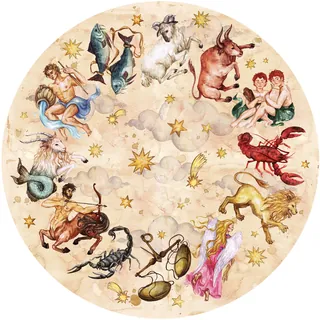
The sign says HOW, and the house says WHERE. Two people with the Moon in Cancer can have emotional lives that look nothing alike: one with the Moon in the 3rd house, who calms down by talking; another with the Moon in the 12th, who only calms down when there is nobody else around. The way of feeling is the same. The place where calm is sought is not.
The twelve houses are the twelve areas in which life happens — the body, money, conversation, home, creation, work, partnership, what is shared, meaning, career, the group and withdrawal. The Moon falls in one of them, and that is the area the person runs to when the day goes wrong.
And here is what separates this series from every other one on the blog: the house is the piece of the chart that depends most on the time of birth. The twelve houses are counted from the Ascendant, and the Ascendant changes roughly every two hours and depends on the city. With no time and no place there is no house at all — not even an approximate one. That is why hardly any site talks about houses: it is work, and it means asking for more than the date.
What it means to have the Moon in the 7th house
Having the Moon in the 7th house means your calm depends on there being someone on the other side. It is not a lack of autonomy, though it gets read that way. It is that this person's emotional system was built to work in twos, and on its own it works at half strength.
The 7th house is the other — marriage, partnership, the contract, the person you share life with. With the Moon there, the state of the closest bond becomes the climate of the day: relationship at peace, person at peace; relationship askew, and nothing else works properly.
And here is what hardly any text writes down: this person does not merely want company, they regulate themselves by it. Talking to somebody is not what comes after the feeling, it is how the feeling gets organised. That is a real need, and not weakness — the trap is not needing people, it is accepting just anyone so as not to be alone.
There is a second piece that changes everything: the sign this Moon is in says what matter this need is made of, and the ruler of the 7th house says what kind of person calms. The house gives the ground; the sign and the ruler give the shape.
How the Moon in the 7th house shows up day to day
It shows in the difference between this person's mood in company and alone. These are concrete signs, the kind you recognise in your own week:
- decides better by talking: thinking out loud with somebody is the method
- an argument at home contaminates the whole of the next day's work
- has a rare talent for noticing what the other needs before they ask
- makes friends quickly, and takes friendships more seriously than average
- gets uncomfortable in long stretches with nobody around
- tends to give in to keep the peace, and sends the bill later
Notice what this list does not say. It does not say the person is dependent nor that they cannot be alone — two labels this position carries and which describe the excess, not the position. It says company is where they calm down.
What are the strengths of the Moon in the 7th house
The strength is making a tie: near this person relationships last. They notice the other in a way most people do not, and it is that small care — remembering, asking, adjusting — that holds a bond for twenty years.
In practice that turns into three useful things: a fine reading of what the other is feeling, useful in any work done in twos; a talent for mediating, because they genuinely understand both sides and not out of diplomacy; and a long loyalty, the kind that makes people come back to them after years.
That strength does best in partnership, front desk, therapy, law, mediation, consulting and any trade that happens two by two. And it does badly in work done alone for long stretches, in an environment of internal competition and in any place where looking after the relationship is treated as a lack of focus.
What are the challenges of the Moon in the 7th house
There are two, and they are opposites: the excess is the other becoming a nervous system, and the deficiency is whoever moved their own centre to the opposite house and made self-sufficiency an identity. The Shelly Method reads every archetype through four faces — the light, the shadow, the excess and the deficiency —, and it is the last of them that hardly any text mentions.
The excess is not managing to process anything alone: every state has to be taken to somebody, and peace at home starts being worth more than the truth. It also shows up as a hasty choice of partner — any company looks better than none, and that is how one enters a wrong relationship out of fear of the gap.
The deficiency is the opposite and hurts more, and it has an address: the 1st house, which sits exactly opposite. It is the person who was let down early, decided they need nobody and turned that into pride. They sort everything out alone, ask for nothing, and call independence what is a bond cut at the root. It is Moon in the 7th house living in the 1st.
Both faces have the same raw material, and that is why the repair is the same: a companionship that has to be chosen, and neither used as a crutch nor refused as a precaution. It is not solved by asking the person to learn to be alone nor to find somebody. It is solved by their knowing what they need and saying it — and that is what the Moon's sign and the ruler of the 7th house show.
These two challenges do not show up in the same way in two people with the Moon in the 7th house. What changes is the rest of the chart — the sign the Moon fell in, which planet rules that house and where the Sun is.
See this in my chart, freeHow the Moon in the 7th house evolves over time
It matures when the person learns to be all right alone without concluding they need nobody — and this discovery is worth more than any attempt to be self-sufficient. Trying to become self-sufficient by effort almost always fails, and produces the deficiency described above.
There is a rhythm that helps understand the arc, and it belongs to the Moon itself: it goes all the way round the twelve houses in about twenty-eight days, and spends some two and a half days in each. Once a month, then, it comes back to your 7th house — and those two and a half days are the ones with most urge to be with somebody, and also the ones with most friction in the bond, because what was put away comes to the surface.
There is a second clock, slower and more interesting: the progressed Moon, which takes about two and a half years in each house and some twenty-seven years to go all the way round. Its passage through the 7th house usually brings marriage, partnership or the end of one of the two — the years in which life deals with who one is with.
Maturity here is not learning not to need. It is the person coming to choose who they need. A mature Moon in the 7th house goes on regulating itself in twos, and starts doing it with somebody who regulates them back — and it is that reciprocity that turns dependency into partnership.
What the Moon in the 7th house does not say about you
It says where you look for calm, and not who you are nor where your life is going — and those two things change everything. The house is the ground; the rest of the chart builds on top of it.
The sign this Moon fell in changes the matter of the need: the same Moon in the 7th house in Libra wants harmony and avoids friction; in Aries it wants somebody who argues on equal terms. See the series The Moon in the 12 signs for yours.
The ruler of the 7th house says what kind of person calms: Saturn in that role points to bonds with people who are older or firmer; Jupiter, to somebody from another place or another background; Mercury, to somebody who talks well, because it is the conversation that holds.
And there is the Sun, which says where your life is organised to grow. Moon in the 7th house with the Sun in the 1st is someone who becomes who they are alone and calms down in company — and that pair lives a back and forth the person usually takes for a contradiction, when it is only the shape of the chart. Worth reading yours in the series The Sun in the 12 houses.
A technical caveat the texts about houses tend to hide: there is more than one house system. Placidus, the most used in Brazil, and Whole Sign, the oldest, can place a Moon born near the boundary in different houses. It is not a calculation flaw: they are different rulers for dividing the same sky. If your birth time is approximate, or if your Moon is in the first or the last degrees of a house, it is worth reading the neighbouring house too and seeing which of the two describes your life. The chart is a system: each piece alters the others.
A limit said out loud, because it is also part of reading seriously: none of this is a diagnosis. Astrology describes tendency and gives vocabulary for what the person already lives; it does not identify illness, does not decide for anyone and does not replace medical care.
Frequently asked questions about the Moon in the 7th house
Do I need the time and the city to know which house my Moon is in?
You need both, with no exception. The twelve houses are counted from the Ascendant, which changes sign every two hours and depends on the latitude of the city. Unlike the Moon's sign, the house has no approximate version: with no time and no place, it simply does not exist.
Does Moon in the 7th house mean I am dependent?
No. It means you regulate yourself with company, and that is different from not managing to live without somebody. Dependency shows up when you accept anyone at all so as not to be alone — and that is a behaviour, not a chart position. Needing people is human; the choice is yours.
Why do I feel so bad when I argue with someone I love?
Because your emotional thermometer hangs on that bond. Where another person registers discomfort, you lose the ground of the day. It helps to agree in advance what to do in the middle of an argument — a pause with a set time to come back usually saves whole nights.
Does this position say I will marry?
It does not. It describes how you calm down, and not your marital status. Many people with this position live well without marriage and regulate themselves with a business partnership, a long friendship or work done in twos. What it demands is a close bond, whatever its name.
Which is stronger: the Moon's sign or its house?
Neither on its own. The sign says HOW this person feels; the house says WHERE they will look for calm. Two people with the Moon in Scorpio, one in the 2nd house and the other in the 9th, feel the same way and live lives that look nothing alike. Reading one without the other is reading half.
Moon in the 7th house in short
Keywords partnership, company, harmony, dependency
This one cannot be found from the date or from the sign: the twelve houses are counted from the Ascendant, and the Ascendant changes roughly every two hours and depends on the CITY where you were born. With no time and no place there is no house at all — not even an approximate one. You can calculate it for free here.
See your whole chart, for free
Sun, Moon, Ascendant, the planets, the houses and the aspects calculated from your date, time and city of birth. It takes less than a minute.
Generate my birth chart for free Want the written reading of the whole? Personality and essence crosses Sun, Moon and Ascendant instead of describing each one separately.